Need a rate card template that shows clients your prices at a glance? This page offers 8 free rate card and rate sheet templates, each with a preview and its own download button (six ZIP files and two XLS spreadsheets), plus one larger bundle ZIP named 25ratesheetcards. Use them for advertising rates, a freelance price list, a consulting fee sheet or a small service business. Some downloads arrive as ZIP files, so extract them first and open the document inside.
What a Rate Card Is and Where It Is Used
A rate card, also called a rate sheet, is a one- or two-page document that lists what you charge. Media companies and bloggers use it to show ad sizes, placements and prices. Freelancers use it to show hourly, daily or project fees. Trades and service businesses use it for call-out fees, labor rates and material charges. Sending one saves the back-and-forth of “how much do you charge?” and gives every client the same starting point.
Rate Card, Rate Sheet, Price List or Labor Worksheet
- Advertising rate card: ad formats, sizes, run dates and cost, often with a discount for repeat bookings.
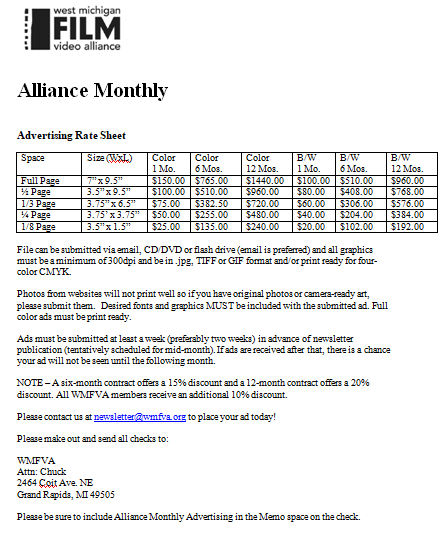
- Magazine or print rate sheet: full-page, half-page and quarter-page prices.
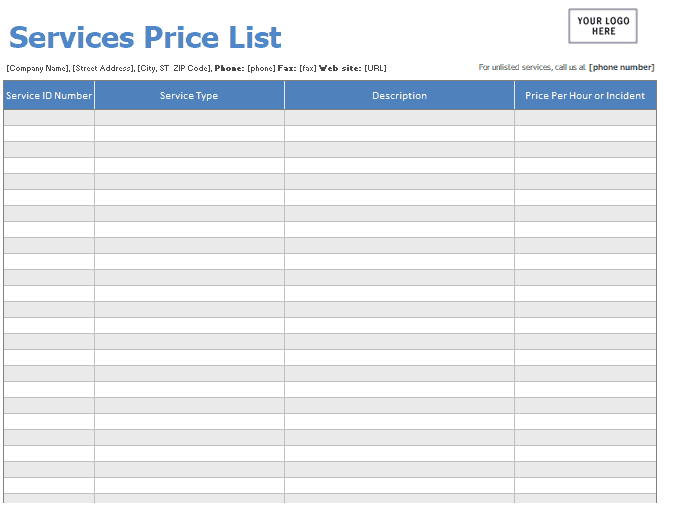
- Service price list: each service with a fixed price or a starting price.
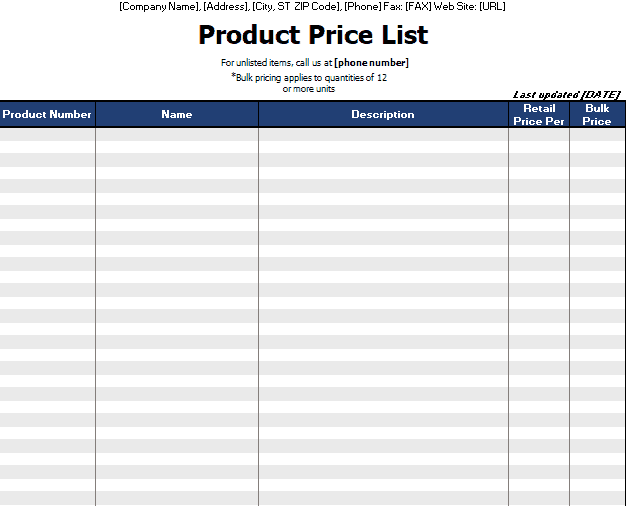
- Product price list: items with unit prices and, where needed, minimum quantities.
- Consulting or wage rate sheet: hourly, daily and project rates, sometimes by seniority.
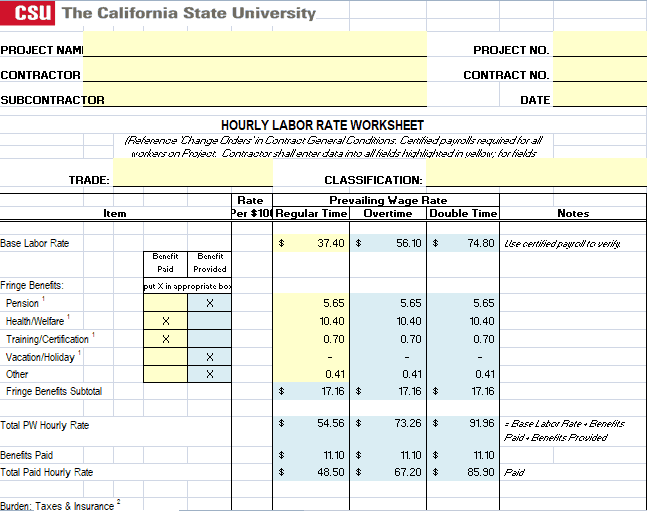
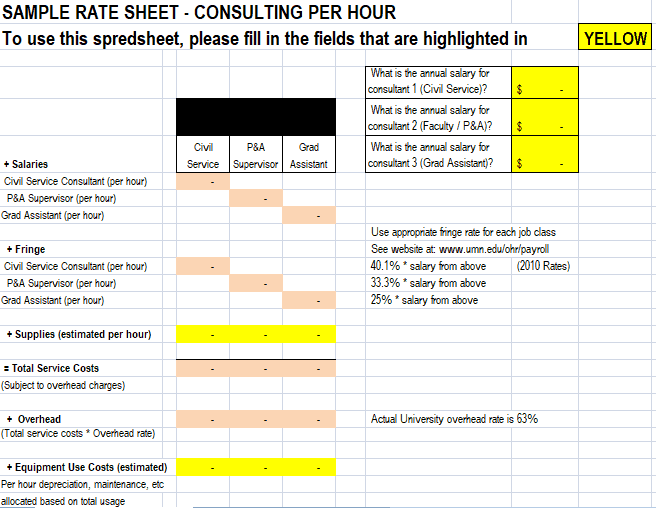
- Labor rate worksheet: a spreadsheet for working out what an hour of work really costs you.
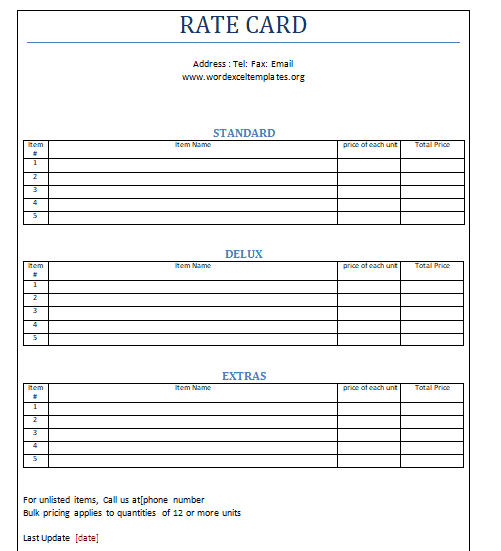
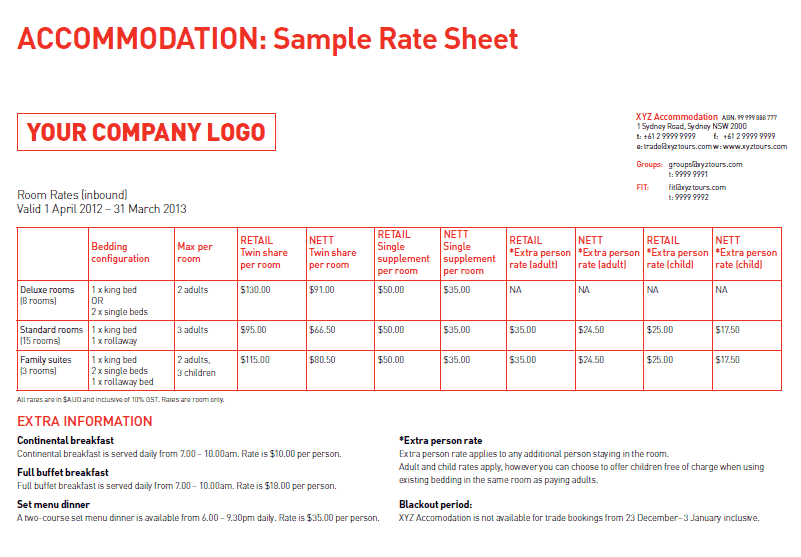
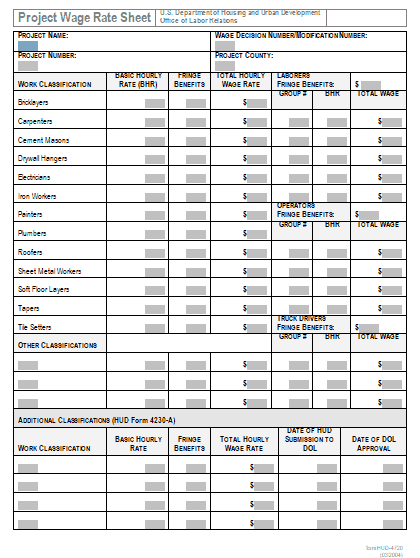
The previews below include examples named service price list, product price list, magazine advertising rate sheet, project wage rate sheet, labor rate worksheet and consulting rate sheet, so you can pick the nearest match to your business.
What to Put on a Rate Card
- Your business name, logo and one contact route
- A short line describing who the rates are for
- Each item or placement with size, length or unit
- The price and the currency, stating whether tax is included
- Discounts for bundles, repeat bookings or long commitments
- What is not included, such as revisions, travel, materials or rush work
- Payment terms: deposit, due date and accepted payment methods
- The date the rates were issued and how long they stay valid
A Small Example: A Blog’s Advertising Rate Card
A food blog might list a banner in the sidebar for one month at 150, a sponsored recipe post at 400, a newsletter mention at 80 and a package of all three at 550. Under the prices it adds: content is reviewed before publication, sponsored posts are labeled as such, payment is due before the ad goes live, and rates are valid until the end of the year. The figures are invented for illustration. Replace them with numbers based on your own audience and costs.
A freelancer would do the same with different lines: a discovery call, a half-day workshop, a full-day rate and a monthly retainer, each with a short note on what is included. Keep the wording plain. If a client can read your card in a minute and know roughly what a project will cost, it is doing its job, and you can save custom quotes for larger or unusual work.
How to Set and Present Your Rates
- List everything you sell, one line per item.
- Work out your costs and the time each item takes, then check what similar providers charge.
- Choose a template from the gallery that fits your kind of pricing.
- Type in your details and prices, then add the terms that protect you, such as deposits and validity dates.
- Read every number twice, save the file and send it to clients as a PDF exported from your word processor or spreadsheet.
- Review the card at least once a year or when your costs change.
Mistakes That Make a Rate Card Hard to Trust
- Listing prices without saying what they include.
- Leaving out the date, so clients quote old prices months later.
- Hiding extra fees in a footnote instead of showing them with the price.
- Making the sheet too long. Two pages is usually enough.
- Using a different card for every client, which makes your pricing look inconsistent.
- Skipping tax and currency information when clients are in different countries.
Free Rate Card Templates to Download
Use the bundle button if you want everything in one file, or pick a single design from the previews. The bundle is a ZIP archive, so extract it and see which files it contains. Some file names do not match the picture beside them exactly, so open each file and check the layout before you send it to a client.
Bundle Download
One button that downloads the whole set as a single ZIP archive.
Individual Rate Card and Rate Sheet Templates
Each preview below has a download button directly under it.

Related Templates
- free order form templates for turning your prices into customer orders
- free receipt of payment templates for confirming payments once a client books
- free income statement templates for checking that your rates cover your costs
- free expense report templates for tracking the costs behind your prices
Frequently Asked Questions About Rate Cards
What is the difference between a rate card and a rate sheet?
Very little. Rate card is the term more often used in advertising, while rate sheet is common for services and labor. Both list prices in a fixed layout.
What file types do the downloads use?
Six individual downloads are ZIP files and two are XLS spreadsheets. The bundle is also a ZIP. Extract the ZIP files and check what is inside, since their contents are not listed on this page.
How do I decide what to charge?
Start with your costs and the hours a job takes, add a margin for overhead and profit, then compare with local or industry rates. Many people begin with an hourly figure and then build packages.
Should a rate card show discounts?
Only if you plan to honor them. Show the condition clearly, for example “3 months booked together” or “orders over 20 items”, so clients know when they apply.
Should I publish my rate card or send it on request?
Both approaches work. Publishing saves time and filters out clients who cannot afford you, while sending on request lets you tailor the rates to each project.
How often should I update my rates?
At least once a year, or sooner if your costs change. Put the issue date and an expiry date on the sheet so old copies do not stay in circulation.
Can a rate card be a contract?
Usually not by itself. It states prices and terms, but you may still need a quotation, proposal or signed agreement. Ask a qualified professional if the work is large or regulated.
Can I use a rate card for a website or blog?
Yes. A media rate card lists ad sizes, placements and prices, and often adds audience details so advertisers can decide. Only include figures you can back up.



You must be logged in to post a comment.