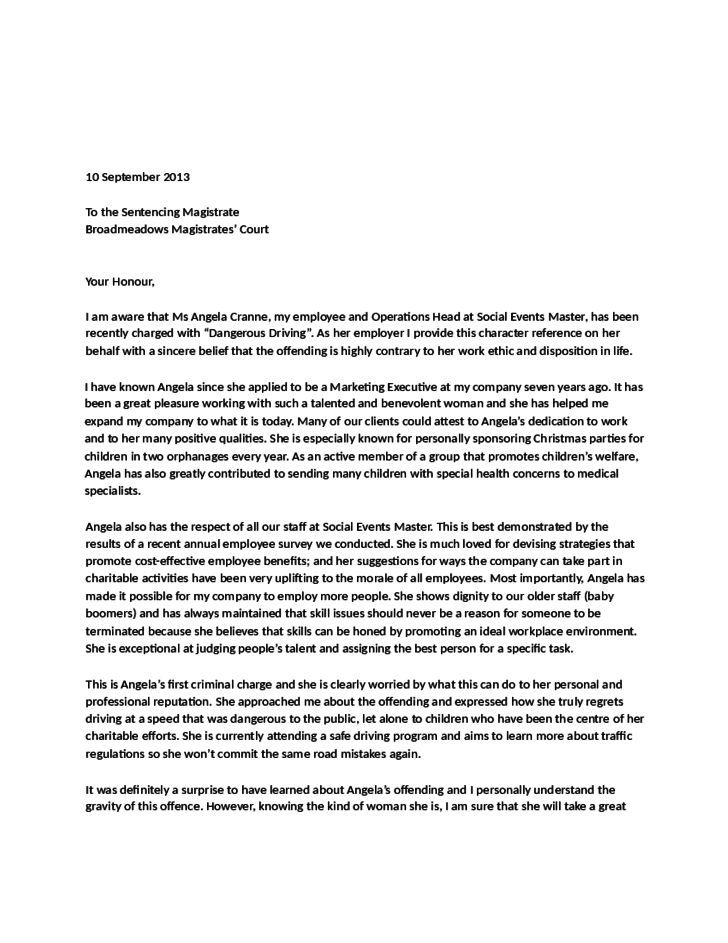
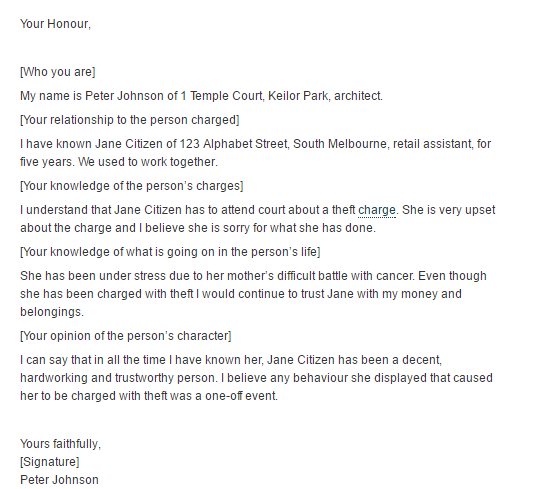
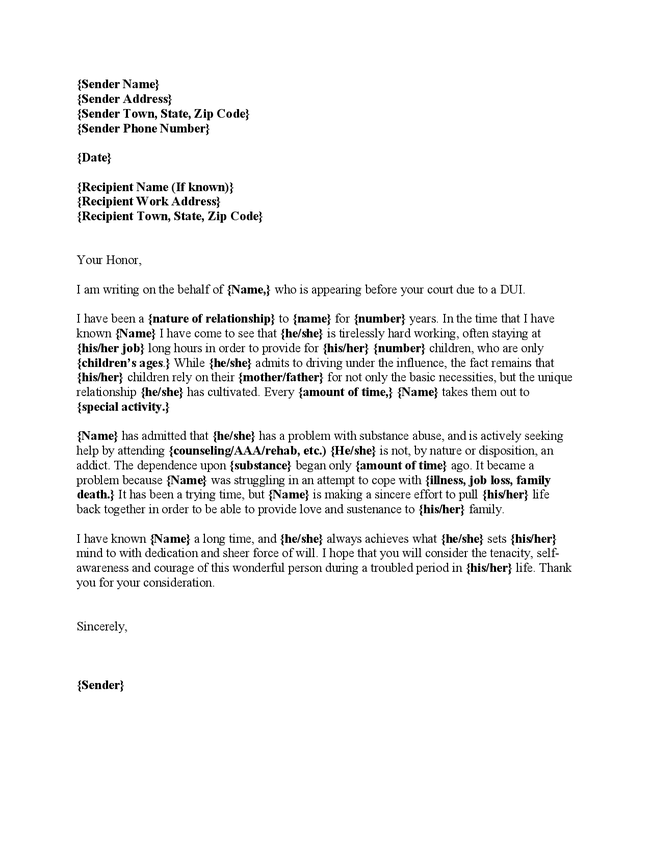
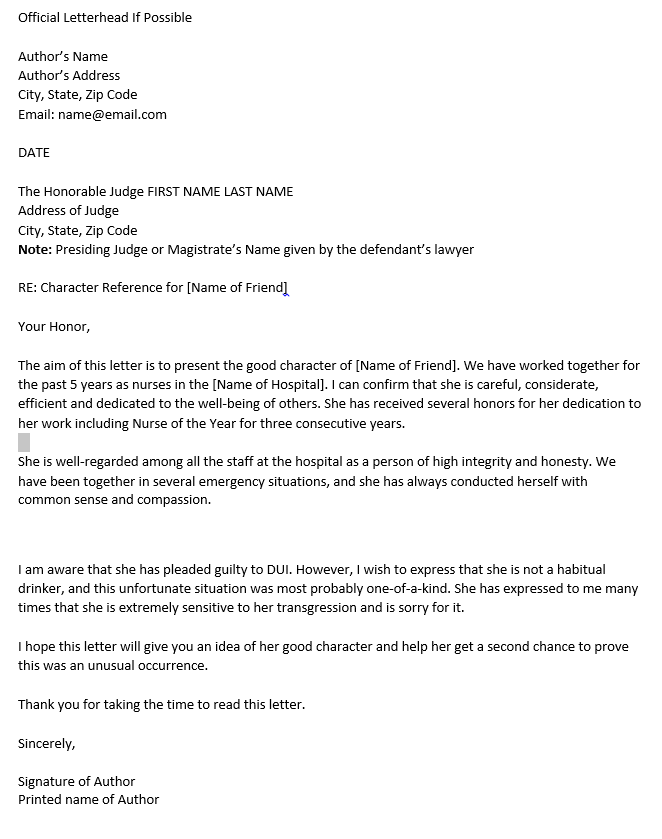
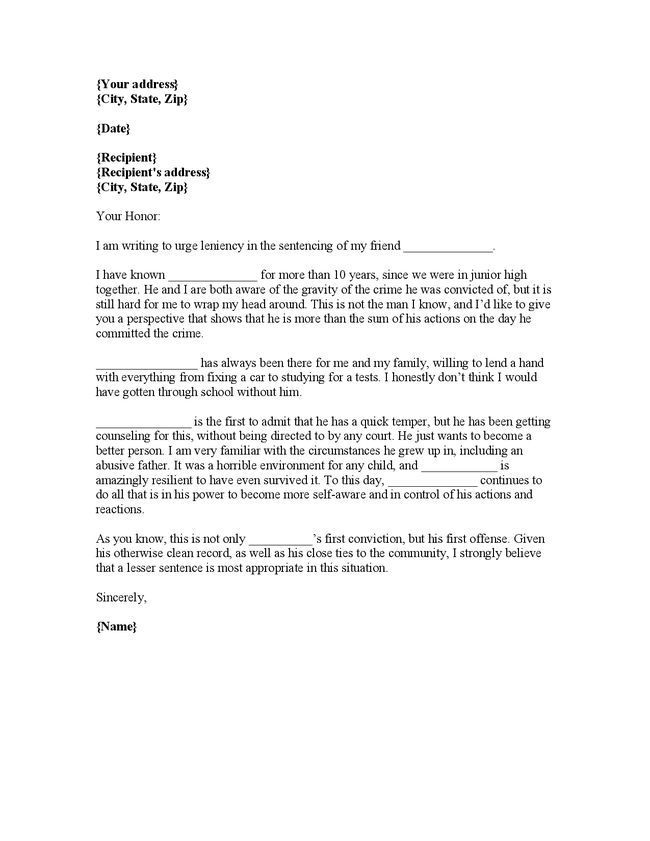
If a friend, employee or family member has asked you for a character reference letter for court, the hardest part is usually the first paragraph. This page collects 5 sample layouts, four of them with Word downloads (.doc and .docx) and one shown as a reference image only. Each sample shows how a judge-facing letter is normally laid out, so you can spend your effort on what only you can supply: honest, specific observations about the person you are writing about.
What a Court Character Letter Is For
A character letter, sometimes called a letter of support or a letter to the judge, is a short statement from someone who knows the defendant. It is normally gathered by the defendant’s lawyer and handed in before a plea, hearing or sentencing. Its job is limited: it gives the court a fuller picture of the person’s reliability, work habits, family role and place in the community. It is not a legal defense, and it does not argue innocence or guilt. Nothing on this page is legal advice, so treat the samples as formatting guides and let the defendant’s lawyer confirm what the court accepts.
Who Should Write One, and What Each Writer Can Add
Judges tend to give more weight to letters that clearly explain the writer’s relationship with the person. Think about what only you have seen:
- An employer or supervisor can describe attendance, honesty with money or equipment, and how the person handled responsibility.
- A neighbor or friend can describe help given during an illness, a move or a bad winter, and how long they have known the person.
- A relative can explain the person’s role at home, such as caring for children or parents, and what a sentence might mean for those who depend on them.
- A coach, teacher or faith leader can speak about volunteering, mentoring and conduct over several years.
What to Put in the Letter
Keep the letter to one page if you can, and two at the very most. A workable order is:
- Your name, address, phone number and the date.
- The judge’s name and court address, exactly as your lawyer gives them, plus the case name or number if provided.
- One or two sentences on who you are and how long you have known the person.
- Two or three specific examples, told briefly, of the character you are describing.
- A short, honest acknowledgment that you know about the charge, without excusing it.
- A respectful close, your signature and your printed name.
A Short Worked Example of the Opening
Openings are where most drafts stall, so here is wording you can adapt: “Dear Judge [Surname], my name is [Your Name] and I have been [Name]’s supervisor at [Company] for six years. I am writing at the request of [his/her] attorney to share what I have seen of [Name]’s character. I am aware of the charge before the court, and I do not write to minimize it.” A middle paragraph might then read: “During a staffing shortage last year, [Name] covered extra shifts without being asked and returned a wallet left at the till to its owner the same day.” Replace those details with your own facts, and only include events you saw or know to be true.
Mistakes That Weaken a Letter
- Arguing the case, criticizing the court or blaming the victim, which can make the letter counterproductive.
- Repeating adjectives such as “wonderful” or “amazing” without an example to back them up.
- Guessing at facts you did not witness, or promising outcomes such as “this will never happen again”.
- Writing several pages, or sending the letter to the judge directly when the lawyer asked to collect them.
- Leaving out your own contact details or forgetting to sign.
Tone, Language and Format
Write in plain, courteous English and use short paragraphs. Avoid legal jargon you would not normally use, because the judge is looking for your own voice. A conventional business letter format works well: sender details at the top, date, addressee, a “Re:” line with the defendant’s full name, the body, then a closing such as “Respectfully”. Use black ink for the signature, use a readable 11 or 12 point font, and proofread the defendant’s name and every date twice. If you write from a workplace, letterhead adds credibility, but only use it if you are actually authorized to speak for the employer. Give the letter to the lawyer well before the hearing date so there is time to correct mistakes.
Using the Sample Files
Click a preview to view it larger, then press the download button beside it to save the Word file. The fifth sample below is an image with no download button, so treat it as a layout reference. Replace the placeholder names with real ones, put in your own examples, and adjust fonts and spacing. Print it, sign it in ink, and hand it to the lawyer; if asked for a PDF, use the save-as-PDF option in Word. Keep a copy for yourself.
Template file guide
Before completing your template
- Replace generic praise with something you personally observed.
- Confirm the recipient and submission instructions with the requester.
- Check your relationship, contact details and signature.
Use the file links below to open an option directly, or continue to the previews to compare layouts. File formats are taken from the linked filenames. Extract ZIP archives before checking the files inside.
| File or resource | Format / source |
|---|---|
| employer character reference letter for court template | DOC |
| character reference letter template, second layout | DOCX |
| character reference court sample, third layout | DOC |
| Reference letter for court template on official letterhead | DOCX |
Sample Character Reference Letter for Court Templates

Related Templates
- free letter of recommendation formats for employment and school references
- company letterhead templates for printing an employer’s letter
- company introduction letter templates for formal business letters
- printable memo templates for short written statements
Frequently Asked Questions (FAQs) About Character Reference Letters for Court
Who is the best person to write a character letter?
Someone who has known the defendant for a reasonable time and can describe specific behavior, such as an employer, teacher, neighbor or family member. Pick people who will be truthful rather than merely enthusiastic.
How long should a character reference letter for a judge be?
One page is ideal and two pages is a sensible ceiling. Judges read many letters, so concise and concrete beats long and emotional.
How do I address the judge?
Ask the lawyer for the judge’s name, title and the court’s address, then follow the form they give you, for example “The Honorable Judge [Surname]”.
Should I mention the offense?
You may briefly show that you know about the charge, but keep the focus on the person. Do not describe the facts of the case unless you saw them yourself.
Is it acceptable to use a template?
Yes, as a starting layout. Write your own examples and phrases so the letter sounds like you, since a copied letter reads as generic.
What if I only know the person from work?
That is fine. Say so plainly, describe what you observed at work and how long you supervised or worked alongside them, and avoid commenting on their private life.
Does the letter need to be notarized?
Usually not, but courts differ. A signed and dated letter is standard, so ask the lawyer whether anything extra is expected.
How do I get the letter to the court?
Most writers hand the signed original to the defendant’s attorney, who submits it with other documents. Sending it directly to the judge is generally discouraged unless the lawyer says otherwise.





You must be logged in to post a comment.