The paper next to each auction item does most of the work at a fundraiser, so a clear silent auction sign up sheet is worth getting right before you print fifty copies. This page collects 11 free printable samples: 9 come with download buttons (mostly Word .doc and .docx files, plus one ZIP) and 2 are image-only examples that you can copy the layout from. Add your organization’s name, the event date and each item’s details, then set the starting bid and bid increment for your crowd.
How a Bid Sheet Works on the Night
In a silent auction, guests write bids on a sheet placed beside a donated item rather than calling them out. Each new bidder writes a name or bidder number and an amount that beats the previous line by at least the stated increment. When the closing time is announced, volunteers draw a line under the last bid, and the highest bidder wins. Because everything is visible on the page, the sheet needs to be readable at a glance, with wide lines, a short item description and clear rules. A cluttered sheet slows bidding and creates disputes at checkout.
Choosing Between Sheet Styles
- Name-and-amount sheets are the simplest option and work well for small community events where people know one another.
- Bidder-number sheets ask guests to write the number on their registration card, which speeds up writing and keeps names private.
- Buy-it-now sheets add a fixed price so a guest can end the bidding early, useful for high-demand items.
- Basket or package sheets list several contents in a short bullet list so bidders know what is included.
- Donor sign-up sheets are a simpler table for collecting pledges or volunteer commitments rather than bids.
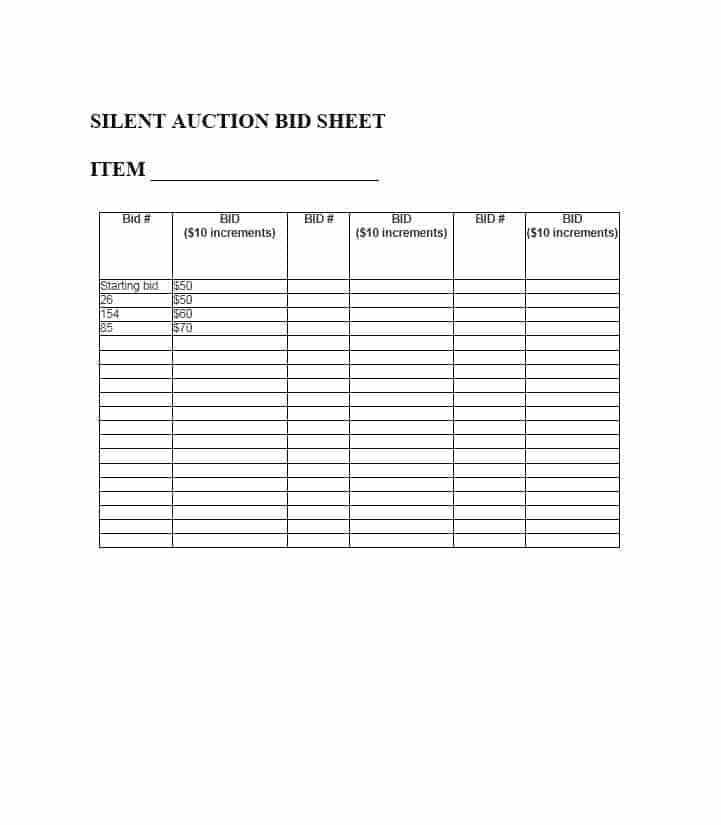
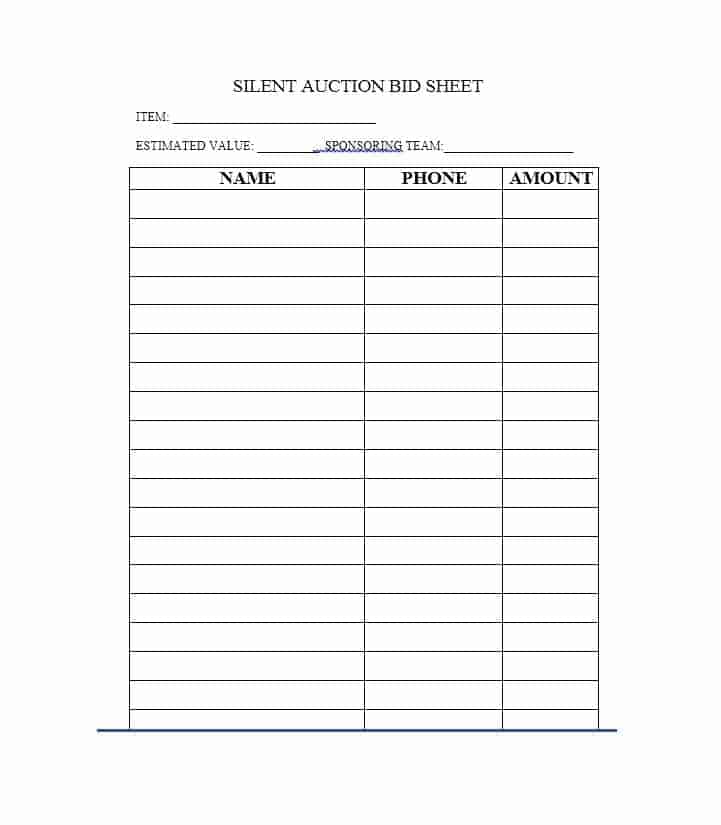
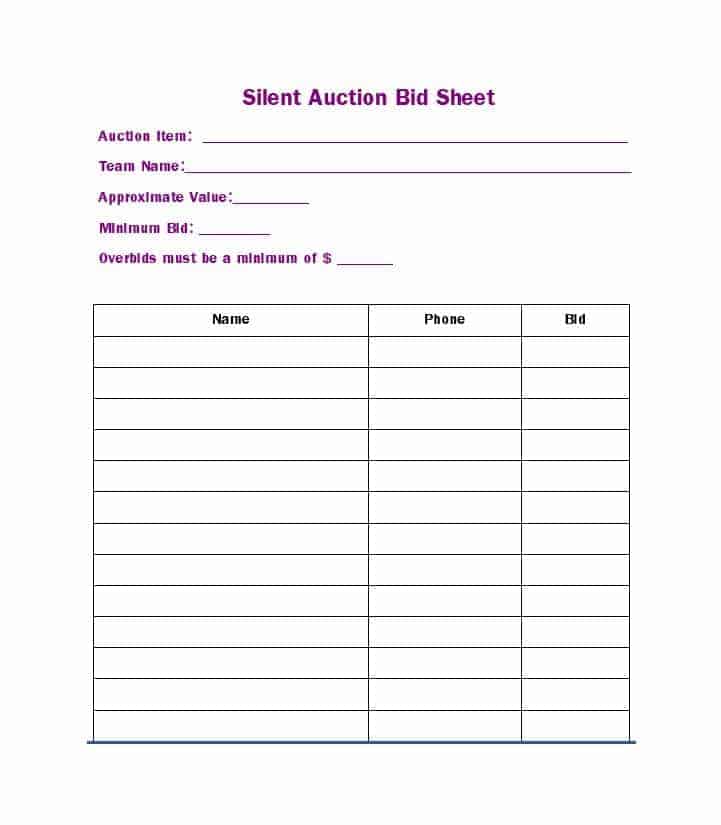
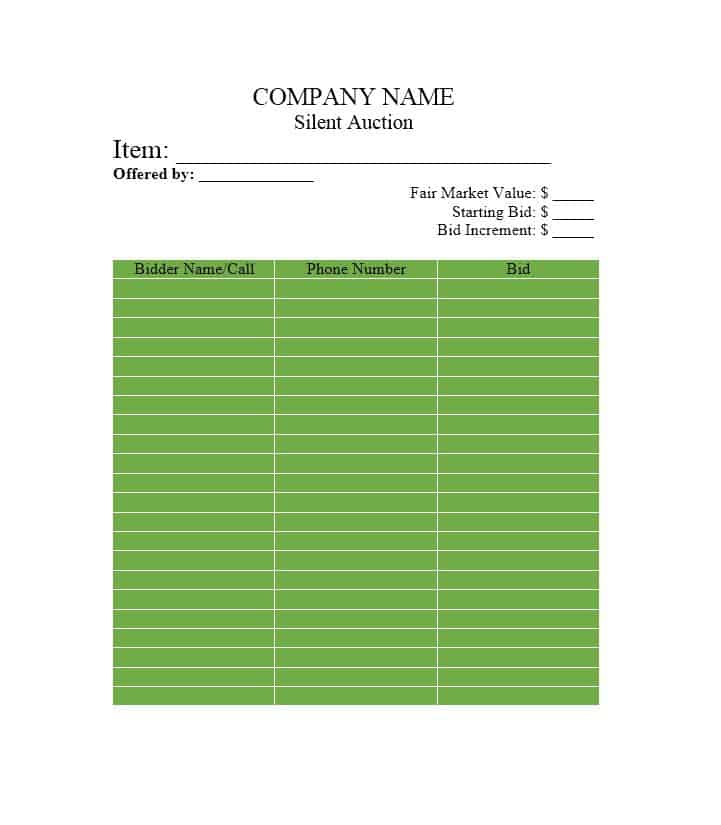
Look through the eleven layouts below and match them to the mix of items you expect. Zoom in on each preview to check the number of rows, the size of the writing lines and where the increment and closing time are shown, since those details matter most on a crowded table. If none of the layouts is perfect, mix elements: take the item description box from one and the bid table from another, then save your own master sheet for future events.
Filling in the Item Details
Every bid sheet should carry the same core information. Include an item number that matches a numbered sign on the table, a short name, a one or two line description, the donor’s name if they wish to be credited, the estimated value, the starting bid, the minimum increment and the closing time. A sample description might read: “Item 14. Weekend for two at a lakeside cabin. Two nights, sleeps four. Estimated value $400. Starting bid $150. Bid increment $10. Blackout dates apply, see back of sheet.” The numbers are only an illustration, so use your own donor-supplied details, and note any restrictions or expiry dates on the sheet so winners are not surprised.
Setting Starting Bids and Increments
There is no single correct figure, but a few habits help. Many organizers set the opening bid at roughly a third to a half of the estimated value so guests feel they are getting a deal, and choose increments that are round numbers, such as $5 for low-value items and $25 or $50 for higher ones. Using increments that are too small makes a sheet fill up quickly, while very large increments can discourage casual bidders. If an item is likely to attract heated competition, print a second sheet or a longer table so everyone has room to write. A guaranteed or buy-it-now price can protect the value of a prized donation.
Running the Table: Practical Tips
- Use pens on strings or keep spares on every table, since missing pens are a classic problem.
- Number tables and sheets in the same order so volunteers can find items quickly at closing time.
- Close tables in stages if you have many items, and announce each closing group clearly.
- Assign volunteers to double-check winners and total each guest’s purchases before checkout.
- Print a few blank spare sheets for items that fill up early.
- Check local rules on receipts and donation values, or ask an advisor if you are unsure.
Common Mistakes to Avoid
The most frequent problems are illegible handwriting, bids that do not meet the minimum increment, and lines that were never closed at the end of the night. Prevent them by using wide rows, printing the increment beside the bid column and having a volunteer draw a line under the final bid. Avoid putting the estimated value in tiny print, avoid cramming three items on one sheet, and avoid using a sheet with only one or two rows for an item you expect to be popular.
Using the Downloads
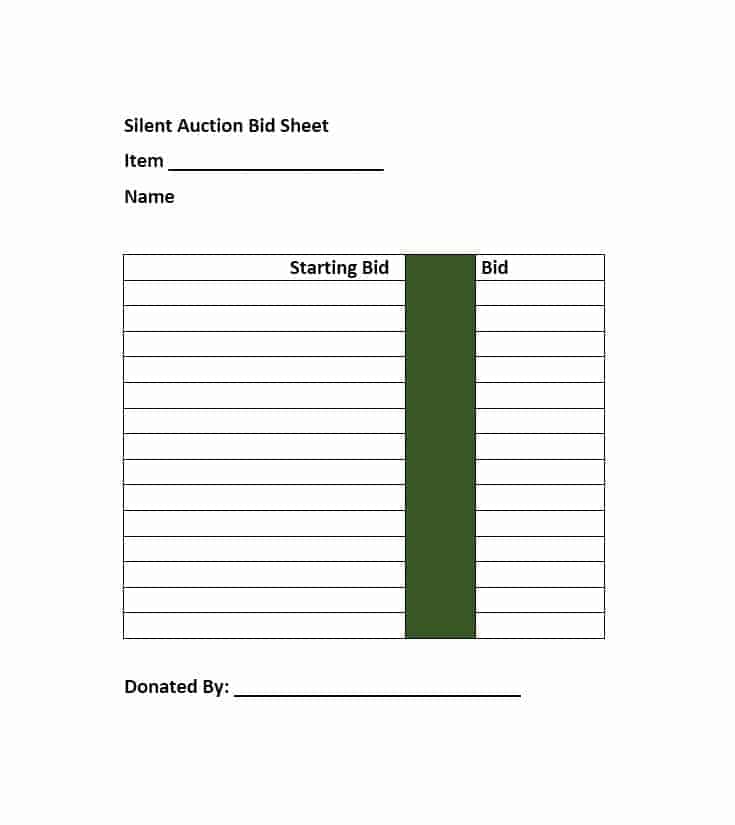
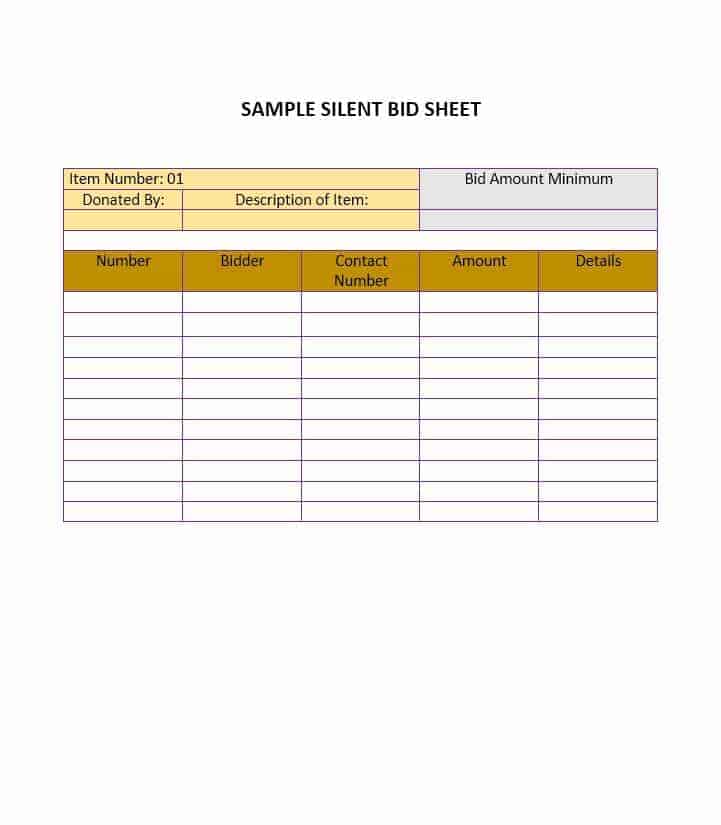
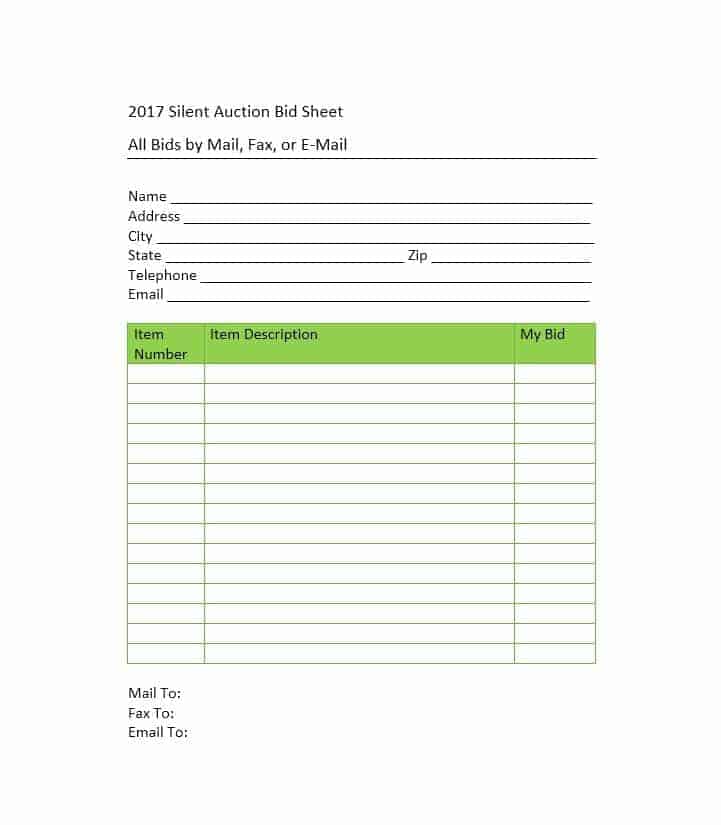
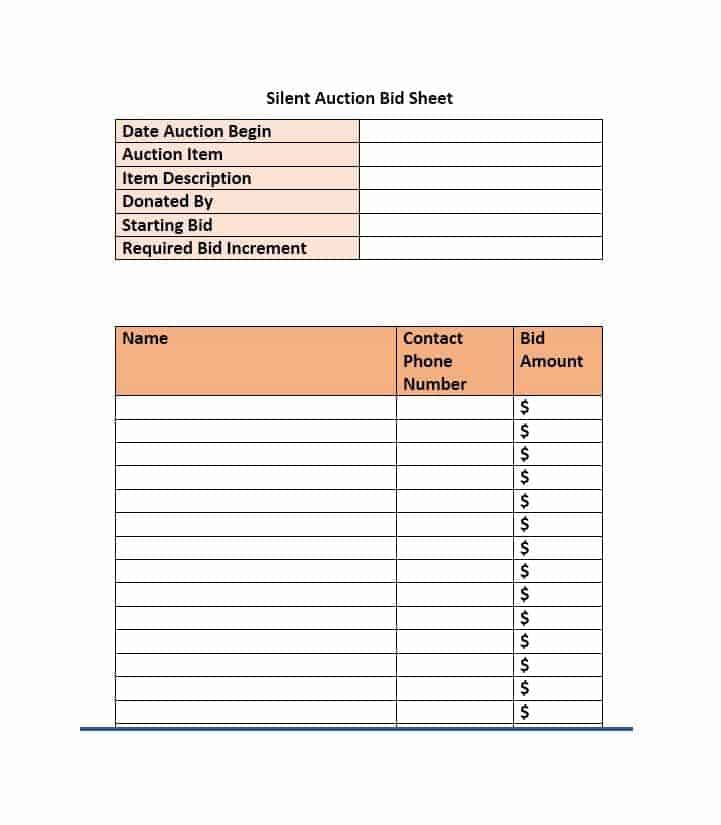
Click a preview to see it full size, then press the download button beneath it. Most downloads are Word documents, and one is a ZIP file that you should extract first. Open the file in Word or a compatible program, type in your event and item details, adjust fonts and colors, and print. The last two samples are shown as images without a download button, so use them for layout inspiration, or recreate them in your own document.
Template file guide
Before completing your template
- Use one item number consistently on the sheet and item display.
- Make the starting bid and increment easy to find.
- Keep guest registration separate from the item bidding record.
Use the file links below to open an option directly, or continue to the previews to compare layouts. File formats are taken from the linked filenames. Extract ZIP archives before checking the files inside.
| File or resource | Format / source |
|---|---|
| silent auction bid sheet template, layout one | DOCX |
| silent auction bid sheet template, layout two | DOCX |
| silent auction bid sheet template, layout three | DOCX |
| silent auction bid sheet template, layout four | DOCX |
| silent auction bid sheet template, layout five | DOC |
| silent auction bid sheet template, layout six | DOC |
| silent auction bid sheet template, layout seven | DOC |
| silent auction bid sheet template, layout eight | DOCX |
| silent auction sign-up sheet template, layout nine | ZIP |
Silent Auction Sign-Up Sheet Templates



Related Templates
- silent auction bid sheet templates with more layouts to compare
- sign-up sheet templates for volunteers and attendees
- raffle ticket templates for another fundraising activity
- event planning templates for organizing the whole evening
Frequently Asked Questions (FAQs) About Silent Auction Sign-Up Sheets
What does a silent auction sign up sheet need to show?
At minimum, the item number and name, a short description, the starting bid, the bid increment, a table for bidder names or numbers and amounts, and the closing time.
How do guests fill in the sheet?
They write their name or bidder number and an amount that is at least the current bid plus the increment. Organizers complete the item details before doors open.
What is a good starting bid?
Many organizers open at a portion of the estimated value so bidding begins at an attractive level. Adjust it to your audience and fundraising goals.
Should I use names or bidder numbers?
Numbers speed things up and protect privacy, while names work in small groups. Bidder numbers require a registration step at the entrance.
How many rows should a sheet have?
Aim for at least ten to twelve lines for ordinary items and add a second page for popular ones. It is better to have blank rows than to run out.
What is a buy-it-now price?
It is a fixed price at which a guest can claim the item immediately and end the bidding. Use it sparingly for items you expect to be in high demand.
Which file formats are available?
The downloads are Word files (.doc and .docx) plus one ZIP file. Two of the samples are images only, with no download button.
Can I add my own logo?
Yes. Open the Word file, insert your logo in the header or corner and change fonts and colors to match your event.






You must be logged in to post a comment.