A daily medication schedule template puts every medicine, dose and time on one page so patients, families and caregivers can see at a glance what has been taken and what is next. This page has 11 free, printable medication charts: six Word documents (.docx), two Excel files (.xls and .xltx), one PDF and two ZIP downloads, covering daily schedules, a monthly calendar, a full medication list and a tick-box medicine chart.
What a Daily Medication Schedule Records
A daily medication schedule is a chart that lists each medicine a person takes, the dose, the time of day and what the medicine is for. It does not decide anything about treatment. Its job is to copy the instructions from a prescription or pharmacy label into a form that is easy to follow, so that a busy morning, a change in routine or a handover between family members does not lead to a missed or repeated dose.
It is useful for someone managing several prescriptions, an older relative living at home, a parent giving a child a short course of medicine and a nurse or carer covering more than one person.
Choosing the Right Medication Chart Layout
- Daily schedule: one page with columns for morning, afternoon, evening and bedtime. Best for a routine that repeats every day.
- Medication dosing schedule: a layout that stresses dose and timing for each medicine, useful when the times are not the same each day.
- Monthly medication schedule: a calendar view for a course of treatment that runs for several weeks, so you can tick off each day.
- Full medication list: a complete record of current medicines, handy to hand to a doctor, pharmacist or hospital.
- Medicine chart with tick boxes: a grid that a caregiver can initial each time a dose is given.
- Excel versions: spreadsheets you can sort, color and update as prescriptions change.
Choose a Word or Excel file if the plan will change and you want to edit it on screen. Choose the PDF as a simple printable sheet to fill in by hand.
What to Fill In on a Medication Schedule
- The name of the person the chart is for, and a date of birth if a caregiver manages several people
- Each medicine’s name, copied exactly from the label
- The dose or strength as prescribed, not as remembered
- Times each medicine is due, and whether it is taken with food or on an empty stomach if the label says so
- The reason for each medicine, in plain words
- Start date, and the end date if the prescriber gave one
- Refill or renewal dates, so a supply does not run out on a weekend
- Known allergies and the doctor’s and pharmacy’s phone numbers
- A box to tick or initial each dose, and a notes line for side effects to mention at the next appointment
Example: A Weekly Routine for an Older Parent
Imagine a daughter setting up a chart for her father, who takes a blood pressure tablet at breakfast, a vitamin with lunch and a second tablet at bedtime. She copies the medicine names and doses from the pharmacy labels onto the daily template, adds the refill date at the bottom, and prints seven copies for the week. The chart hangs beside the pill organizer. Each time a dose is taken, her father or a visiting carer initials the box. At the next appointment, the completed sheets show the doctor which doses were taken on time and where he noticed dizziness, without anyone having to guess from memory.
Using a Medication Schedule Safely
- Always follow the directions of your doctor or pharmacist; a template only helps you record them.
- Never change a dose or stop a medicine because of what a chart says. Ask a healthcare professional first.
- Update the chart whenever a prescription changes, and throw away the old copies so two versions never circulate.
- Keep a copy in your bag or phone for appointments and emergencies.
- Ask a pharmacist if you are unsure about timing, especially when taking several medicines.
- Store the chart where the person and any carer can see it, and keep medicines themselves out of reach of children.
How to Use These Medication Schedule Templates
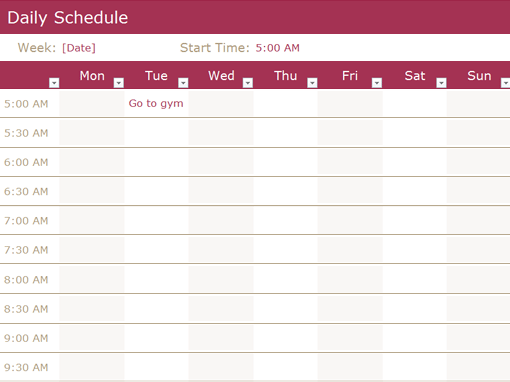
Every template below has a preview image and a download button. Press the button under the preview you want to save the file. Word and Excel files can be edited on a computer and then printed. The PDF can be printed and completed by hand. Some downloads arrive as ZIP files, so extract them first and check what is inside before you start typing. Gather your prescriptions and labels first, and copy the details exactly as written.
Template file guide
Before completing your template
- Copy instructions from the current prescription or clinician’s directions.
- Keep the medicine list and schedule consistent.
- Update the chart with the care team when instructions change.
Use the file links below to open an option directly, or continue to the previews to compare layouts. File formats are taken from the linked filenames. Extract ZIP archives before checking the files inside.
| File or resource | Format / source |
|---|---|
| daily medication schedule template | ZIP |
| printable daily medicine schedule template | ZIP |
| medication dosing schedule template | |
| medication schedule template in Excel | XLS |
| daily medication schedule Excel template | XLTX |
| full medication list template | DOCX |
| monthly medication schedule template | DOCX |
| medicine chart template | DOCX |
| sample daily medication schedule template | DOCX |
| colorful daily medication schedule template | DOCX |
| simple daily medication schedule template | DOCX |
Download Free Daily Medication Schedule Templates
Daily Medication Schedule Template (ZIP)


Printable Daily Medicine Schedule (ZIP)

Medication Dosing Schedule Template (PDF)

Medication Schedule Template in Excel

Daily Medication Schedule Excel Template

Full Medication List Template

Monthly Medication Schedule Template

Medicine Chart Template

Sample Daily Medication Schedule for Word

Colorful Daily Medication Schedule Template

Simple Schedule for Daily Medication

Related Templates
- daily schedule templates and planners for the rest of your day around doses
- weekly schedule templates to plan appointments and pharmacy trips
- doctors note templates for absence and appointment notes
- medical certificate templates for confirming an illness or fitness to return
Frequently Asked Questions (FAQs) About Daily Medication Schedule Templates
What is a daily medication schedule used for?
It is used to record which medicines a person takes, the dose and the time of day, so that the routine is easy to follow and to share with caregivers, doctors or pharmacists.
Can a template tell me how much medicine to take?
No. A template only records information. Your dose and timing must always come from your doctor, pharmacist or the medicine label, and questions should go to a healthcare professional.
What information should I write on a medication chart?
Write the person’s name, each medicine, the dose, the time to take it, its purpose, any special instructions and the prescriber’s contact details. Copy dosing details exactly from the prescription or label.
How do I record a medicine that is only taken when needed?
Add a separate row and write the reason for use, the dose written on the label and the maximum the label allows. Note the time of each use so the next person can see when it was last taken.
How can caregivers use a shared medication chart?
Keep one printed chart in a fixed place and have whoever gives a dose tick and initial the box. This creates a clear record and helps prevent doses from being missed or repeated by mistake.
Is there a monthly medication schedule template?
Yes. A monthly medication schedule is included above, laid out so you can track a course of medicine across the whole month.
How often should I update my medication list?
Update it whenever a medicine is added, changed or stopped, and review it at each medical appointment so the information stays accurate.
Why are some of the downloads ZIP files?
Some downloads on this site are packaged as ZIP archives. Extract the archive first, then open the file inside in a program that can edit it or print it.


You must be logged in to post a comment.