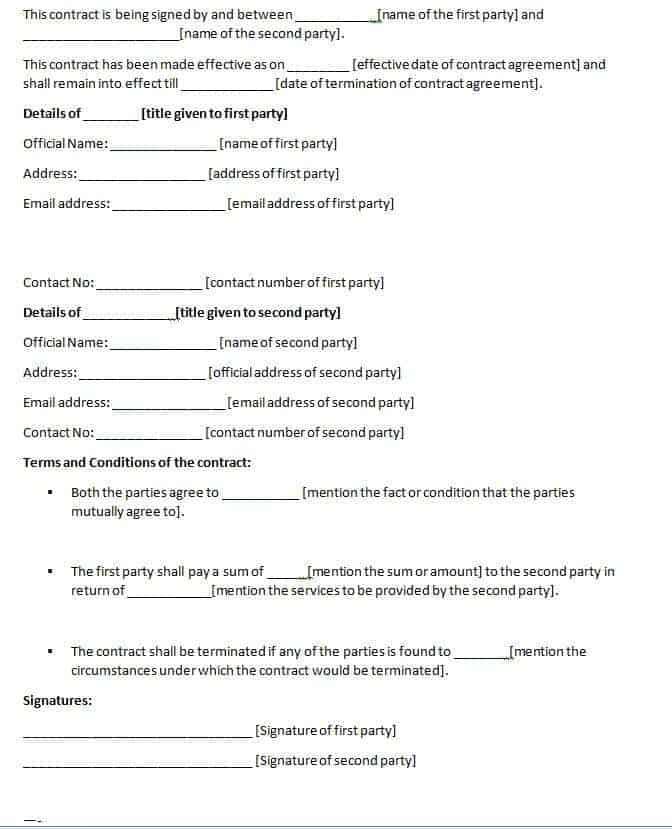
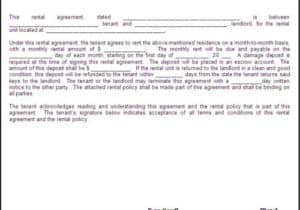
Handshake deals work until the day two people remember them differently. A written contract between two parties template gives you a structure for recording who promises what, by when and for what payment, so both sides can refer back to the same page. This page offers 2 free samples: an agreement layout in a ZIP download, whose file name points to a home renovation contractor agreement, and a contract between two companies in a Word .docx file. Use them as starting points and edit the names, terms and figures to match your own deal.
When a Two-Party Written Agreement Is Worth the Effort
Any time money, time or property changes hands, a written agreement pays off. A freelancer designing a website for a client, a contractor renovating a kitchen, a shop buying stock from a supplier, and two companies sharing a project all need to agree on scope, price and deadlines. The bigger or riskier the arrangement, the more detail the contract needs. A one-page agreement is often enough for a small job, while a long-term supply arrangement usually needs several pages and possibly professional review.
The Building Blocks of a Two-Party Contract
Most agreements follow the same skeleton. Working through it clause by clause is a good way to use the samples:
- Parties: full legal names, addresses and, for companies, the registered name and the person authorized to sign.
- Purpose or recitals: a sentence or two on why the agreement exists.
- Scope: exactly what will be delivered, in what quantity and to what standard.
- Timeline: start date, milestones, delivery dates and the term of the agreement.
- Price and payment: total amount, schedule, invoicing method and late payment consequences.
- Responsibilities: what each side must provide, such as access, information or materials.
- Changes: how variations to the scope or price are requested and approved in writing.
- Ownership and confidentiality: who owns the work product and what information must be kept private.
- Termination: how either side can end the agreement and what happens to payments already made.
- Disputes and governing law: the method for resolving disagreements and the law that applies.
Examples of Clear and Unclear Wording
Small drafting choices make a big difference. “The Contractor will renovate the kitchen” invites argument. A clearer version is: “The Contractor will remove the existing cabinets, install the new cabinets listed in Schedule A, and complete the work by [date]. Any additional work must be approved in writing by both parties before it begins.” Likewise, “Payment on completion” is vague, whereas “The Client will pay [amount] within 14 days of receiving each invoice” is measurable. The dates and amounts here are placeholders, so use your own figures and check local rules on deposits and consumer protections.
What Makes an Agreement Enforceable
In general terms, courts look for an offer and acceptance, something of value exchanged, an intention to be bound, parties with legal capacity and a lawful purpose. Requirements differ between countries and states, and some contracts, such as those involving land, may need special formalities like witnesses or notarization. A template can give you a sensible layout but it cannot tell you what your local law requires, which is why a lawyer’s review is wise for large sums or unusual terms.
Adapting a Template to Your Situation
Start by deleting anything that does not apply, since unused clauses create confusion. Then read the document as if you were the other party: would you know what to do, when, and what you would be paid? If the answer is no, add detail. Freelancers might add a clause on revision rounds and who owns the final files. Contractors might attach a schedule of materials, a payment milestone table and a note about site access. Two companies might add data protection, insurance and notice details such as the address or email where formal messages must be sent. Finally, check that names, dates and amounts match across the whole document, including headers and signature blocks, before anyone signs. A final read-through by someone not involved in the deal often catches ambiguous phrases and missing details that the authors no longer notice.
Mistakes People Make With Simple Contracts
- Signing in the wrong capacity, for example as an individual when the agreement should be with the company.
- Leaving blanks, then filling them in after signature.
- Describing the scope with general phrases such as “as needed” or “reasonable efforts” and no measurable deliverables.
- Forgetting to say who pays for materials, travel or permits.
- Not keeping a signed copy or the emails that record agreed changes.
- Copying a template written for a different kind of deal without adapting the clauses.
Using the Two Downloads
Click a preview to see it at full size, then press the download button next to it. One file is a ZIP, so extract it first, and the other is a Word .docx that opens directly. Replace the sample names, terms and figures, delete clauses that do not apply, and add any schedules or price lists. Print the final version or save it as a PDF from your word processor, have both parties sign and date it, and keep a copy each. This page provides general templates, not legal advice.
Template file guide
Before completing your template
- Identify both parties and the correct signatories.
- Make the work description and payment milestones agree.
- Remove clauses and sample details that do not fit the transaction.
Use the file links below to open an option directly, or continue to the previews to compare layouts. File formats are taken from the linked filenames. Extract ZIP archives before checking the files inside.
| File or resource | Format / source |
|---|---|
| contract between two parties template | ZIP |
| contract between two companies template | DOCX |
Contract Between Two Parties Template Samples


Related Templates
- catering contract templates for event food service agreements
- payment contract templates for spelling out amounts and due dates
- scope of work templates for defining deliverables
- loan agreement templates for lending between two parties
Frequently Asked Questions (FAQs) About Contracts Between Two Parties
Does a contract have to be written to be valid?
Many agreements can be valid without writing, but a written contract is much easier to prove. Some kinds of agreements must be in writing under local law.
What makes a contract legally binding?
Generally an offer, acceptance, consideration, mutual intent to be bound, capacity and a lawful purpose. Signatures from both parties are the usual sign of agreement.
Can an individual sign for a company?
Only if they have authority. The contract should show the company’s legal name and the signer’s title, and you may want written confirmation of their authority.
How specific should the scope of work be?
Specific enough that a third party could tell whether the work was done. Include quantities, standards, deadlines and what is excluded.
What if we need to change the terms later?
Record the change in writing and have both parties sign or initial it. Informal changes by chat or phone are easy to dispute later.
Are these samples available as PDF?
The downloads are a Word .docx file and a ZIP file. Once you complete the agreement, you can print it or save it as a PDF from your word processor.
Should a lawyer review my contract?
For a small, low-risk arrangement a template may be enough. For large sums, long commitments or complicated terms, professional legal advice is sensible.
How long should I keep a signed contract?
Keep it at least for the life of the agreement and for as long as your local rules or tax requirements suggest, along with related invoices and correspondence.
You must be logged in to post a comment.