A SOAP note template gives you a ready-made page with four labelled sections (Subjective, Objective, Assessment and Plan), so you can record a patient or client visit in the same order every time. This page offers 7 free, editable Word (.doc) layouts you can type into or print for handwritten charting, whether you are a nursing student practicing your first note or a clinician tidying up a busy clinic day.
What a SOAP Note Actually Records
A SOAP note is a short, structured entry that answers four questions in a fixed order: what did the patient say, what did you find, what do you think it means, and what happens next. Because the order never changes, a colleague covering your shift can open the chart and find the last assessment in seconds instead of reading a page of narrative. The format is taught in nursing, physical therapy, occupational therapy, counseling, chiropractic, athletic training and veterinary programs, which is why a blank SOAP note format is one of the most searched clinical forms.
The Four Sections and What Belongs in Each
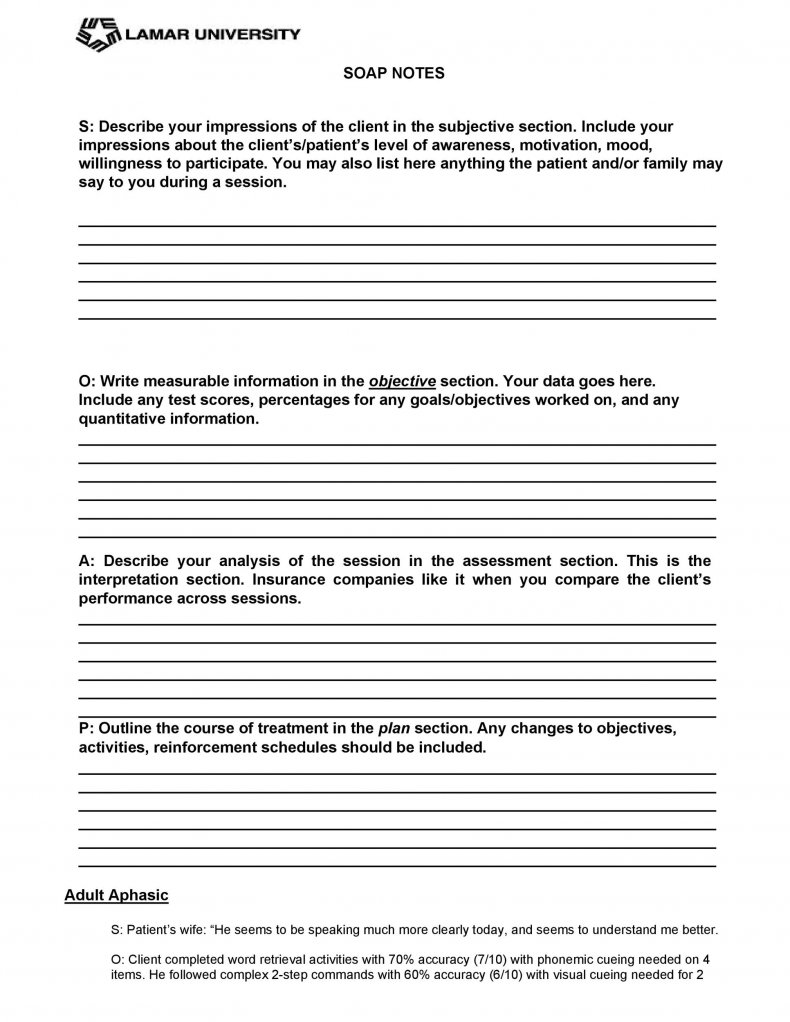
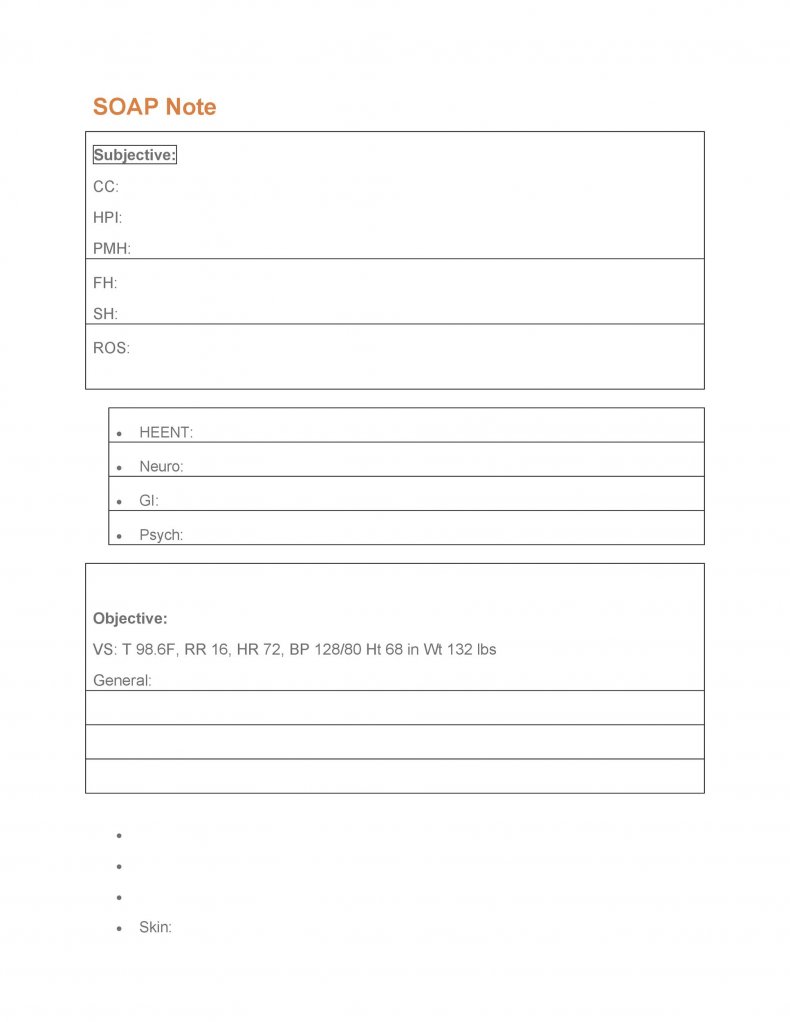
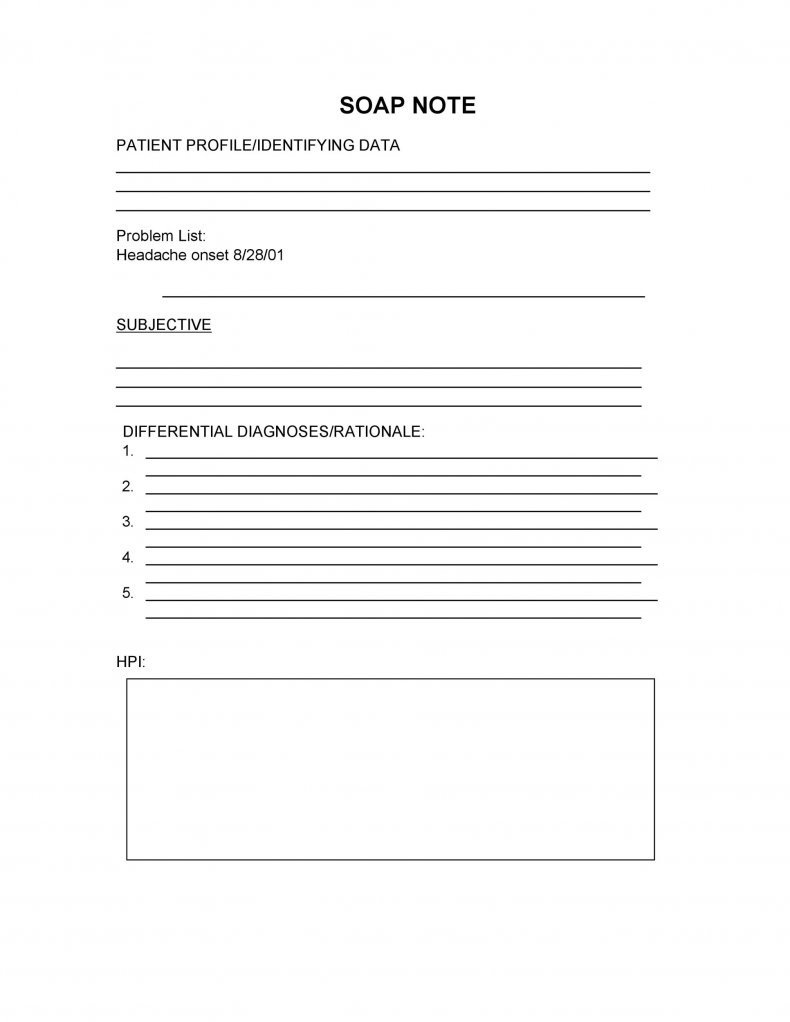
- Subjective (S): The chief complaint in the patient’s own words, onset and duration, pain rating, what makes it better or worse, relevant history and any medications the patient says they take.
- Objective (O): Things you can measure or observe: vital signs, range of motion, inspection and palpation findings, test results, and how the patient looks and moves during the visit.
- Assessment (A): Your professional summary of the problem, such as a working diagnosis, a progress statement compared with the last visit, or a short list of problems in priority order.
- Plan (P): Treatment given today, orders, prescriptions or referrals, home instructions, patient education and when the patient should return.
Free SOAP Note Template Downloads: Choosing a Layout
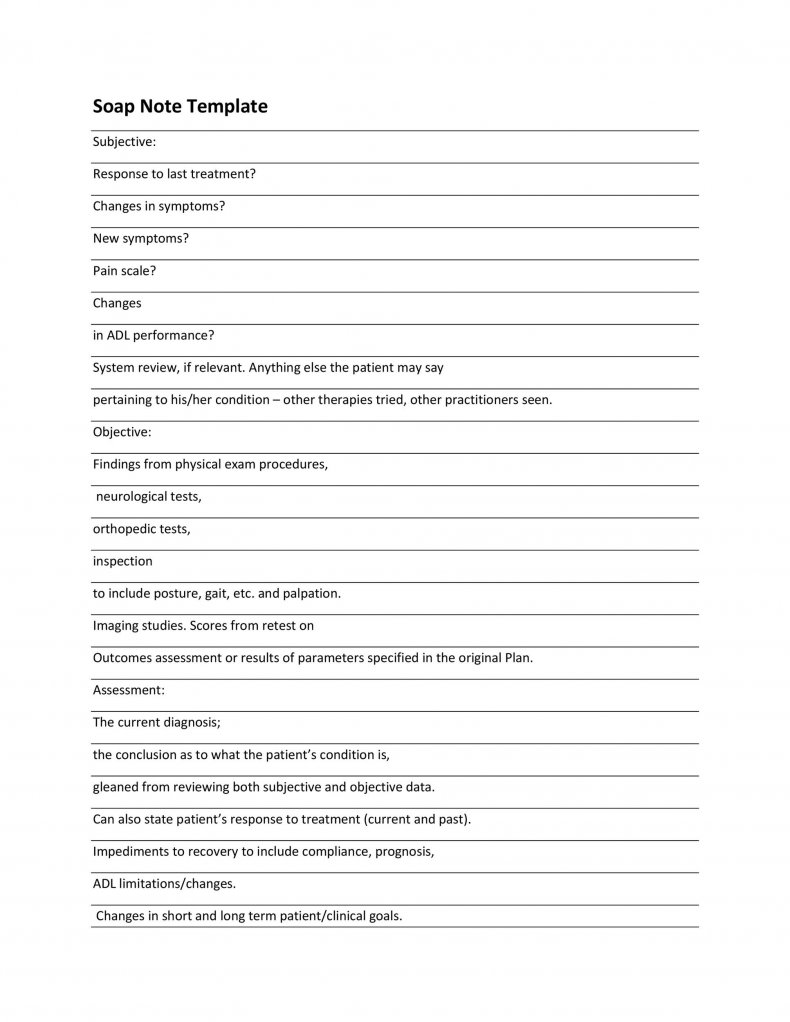
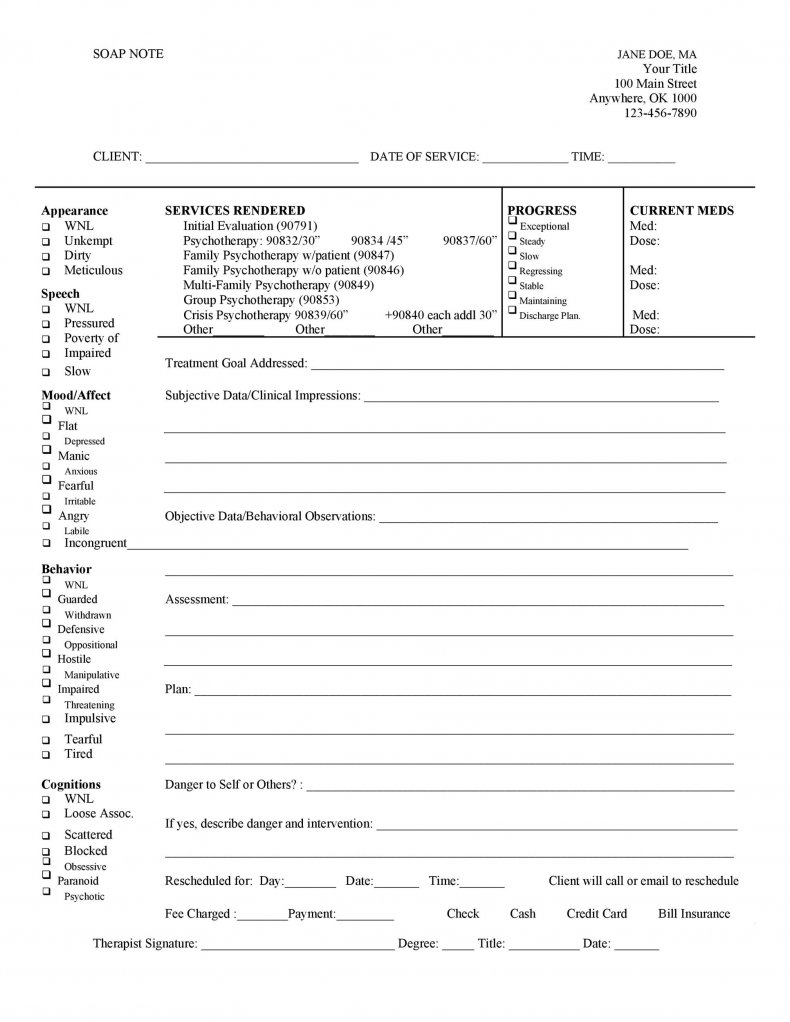
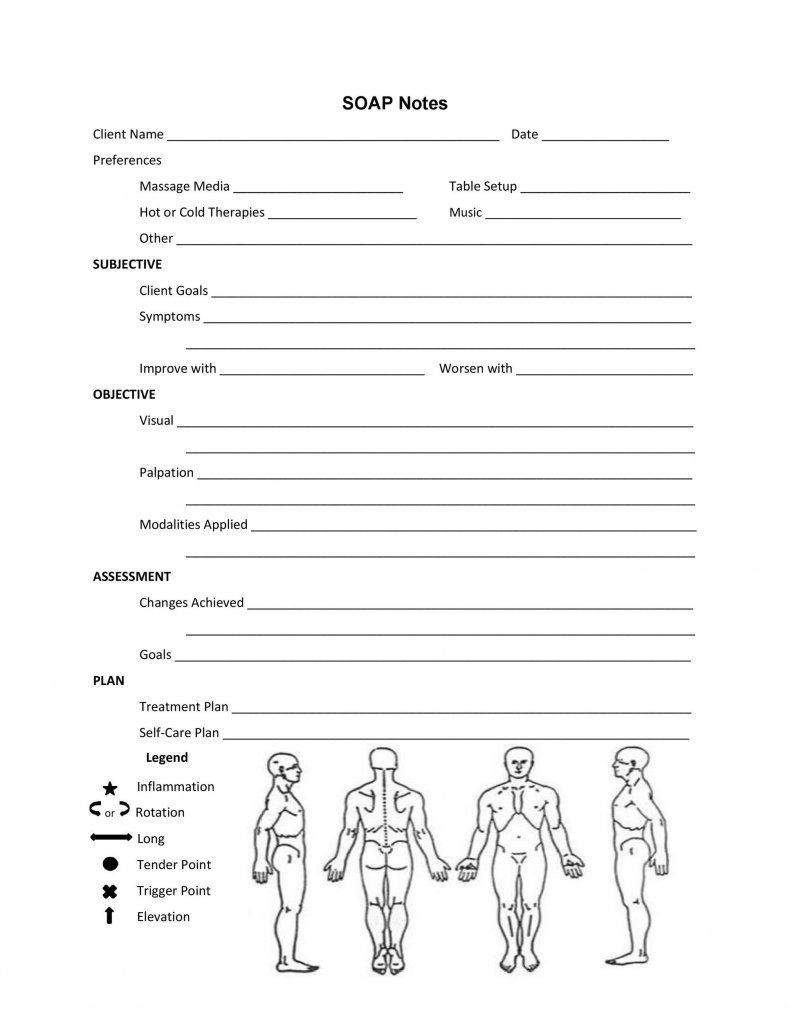
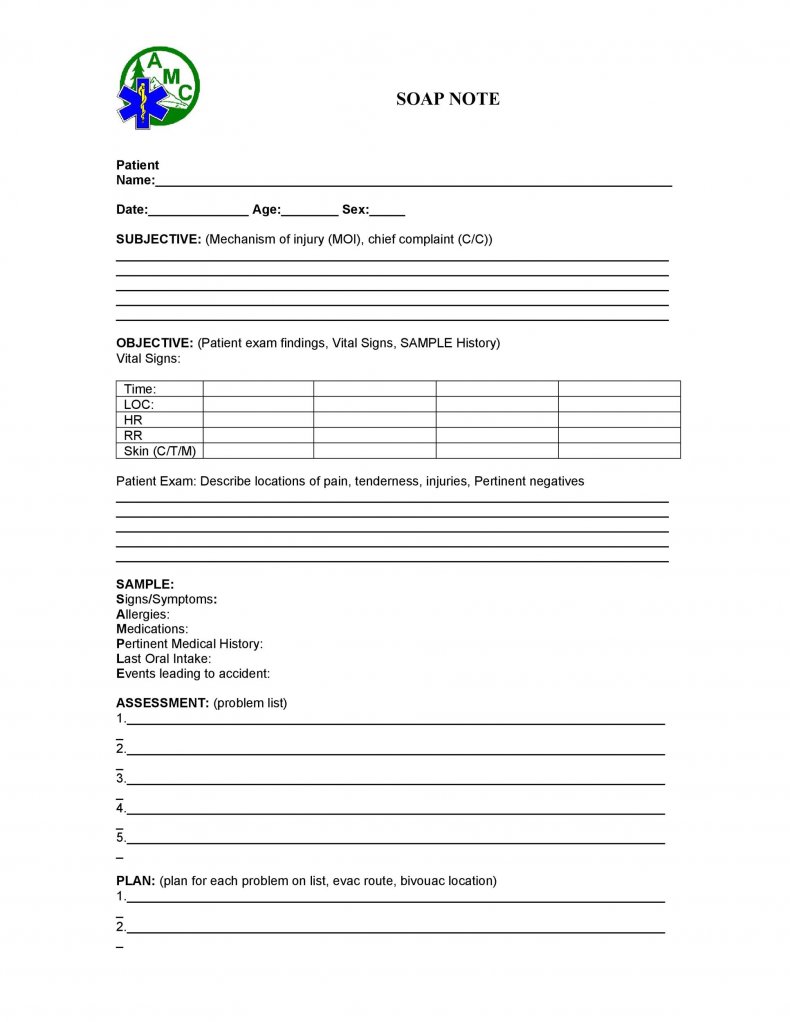
The previews below differ in how much space each section gets. A layout with a large Subjective box suits counseling or intake visits, while one with a bigger Objective area suits therapy sessions where you record measurements. Click a preview to see it full size, then use the button under it to save the Word file. Open it in Microsoft Word, LibreOffice or Google Docs, add your practice name, and delete any field you never use. Some links on this page may load from a different location than the rest of the site, and the file names do not always match the preview above them, so check the file after you open it. If you plan to hand-write notes, print one copy first and test whether the boxes leave enough room for your handwriting before you print a whole stack for the clinic.
A Short Example of a Filled SOAP Note
The fictional entry below shows how brief a useful note can be.
- S: Adult client reports right shoulder pain for two weeks after painting a ceiling, rated 5 out of 10, worse when reaching overhead, eased by rest.
- O: Limited overhead reaching on the right, tenderness over the top of the shoulder, no visible swelling.
- A: Findings are consistent with overuse strain, improving compared with the prior visit.
- P: Gentle mobility exercises, avoid overhead work for one week, recheck in seven days or sooner if symptoms worsen.
How to Write a SOAP Note Step by Step
- Fill in the header first: patient name or ID, date and time, provider and visit type.
- Write the Subjective section from what the patient told you, quoting key phrases instead of paraphrasing them into diagnoses.
- Add only findings you observed or measured to the Objective section.
- In the Assessment, connect your conclusion to the evidence above it.
- Write a Plan that another clinician could follow without asking you questions.
- Read it once for typos and unclear abbreviations, then sign and date it.
Common SOAP Note Mistakes to Avoid
- Placing a measurement in Subjective or a symptom in Objective, which blurs the two sections.
- Writing an Assessment that simply repeats the complaint.
- Leaving the Plan vague, such as “follow up as needed,” with no timeframe.
- Using abbreviations your workplace has not approved.
- Copying yesterday’s note forward without updating it.
- Storing filled notes on a personal laptop or shared drive that your organization does not permit.
These templates are formatting aids only. They are not medical advice, and you remain responsible for following your employer’s charting rules and the privacy laws that apply where you work. Remove names and other identifying details from any practice or teaching copy.
Who Uses a SOAP Note Format
Physicians and nurse practitioners use it for office visits, while registered nurses and nursing students use it for focused patient assessments. Physical and occupational therapists rely on it to show progress from one session to the next, and speech-language pathologists, chiropractors, massage therapists and athletic trainers use variations of the same four parts. Counselors and social workers often keep the Subjective and Assessment sections most detailed, and veterinary technicians adapt it for animal patients. Because the structure is so widely taught, a note written this way is easy for a new team member to read, and it also makes a handy teaching tool when a supervisor wants to review your clinical reasoning line by line.
Template file guide
Before completing your template
- Use a layout that supports your organization’s documentation process.
- Keep reported information separate from observed findings.
- Remove fictional practice details before any authorized clinical use.
Use the file links below to open an option directly, or continue to the previews to compare layouts. File formats are taken from the linked filenames. Extract ZIP archives before checking the files inside.
| File or resource | Format / source |
|---|---|
| SOAP note template — option 1 | DOC |
| SOAP note template — option 2 | DOC |
| SOAP note template — option 3 | DOC |
| SOAP note template — option 4 | DOC |
| SOAP note template — option 5 | DOC |
| SOAP note template — option 6 | DOC |
| SOAP note template — option 7 | DOC |
SOAP Note Templates:

Related Templates
- free medical certificate templates
- doctors note templates for work and school
- daily medication schedule templates
- incident report templates
Frequently Asked Questions (FAQs) About SOAP Notes
What does each letter in SOAP stand for?
S is Subjective, O is Objective, A is Assessment and P is Plan. Together they form a four-part record of one visit.
How do I tell subjective and objective information apart?
If the patient reports it, such as pain, worry or a symptom timeline, it is subjective. If you can see, measure or test it, such as blood pressure or joint movement, it is objective.
How long should a SOAP note be?
Long enough that a colleague understands the visit, and no longer. Many good notes fit on one page, with each section limited to relevant facts.
What is the difference between a SOAP note and a progress note?
A progress note is the general term for any chart entry that tracks change over time. A SOAP note is one structured way to write a progress note.
Can nursing and therapy students practice with these forms?
Yes. Practicing on blank forms with fictional cases helps you learn to sort information into the right section. Ask your instructor which format your program expects.
Can I add fields such as vital signs or medication lists?
Yes. The files are editable Word documents, so you can add rows, tick boxes or headings that match how your clinic works.
Are the downloads PDF or Word?
The download buttons on this page link to Word (.doc) files. After filling one in, you can save or print it as a PDF from your word processor.
Is it safe to store completed notes from these templates?
Only if your organization allows it. Follow your workplace policy and applicable privacy rules, and use practice cases without real patient details when learning.

You must be logged in to post a comment.