A payment contract template saves you from the awkward moment when two people remember a money deal differently. This page offers four free, editable samples for spelling out who pays whom, how much and when: an advance payment contract, an installment payment contract, a car payment contract and a payment plan contract. Each one is a free download that arrives as a ZIP file, so you can adapt the wording to a sale, a service job or a debt you are settling.
What a Payment Contract Actually Does
A payment contract, sometimes called a payment agreement, is a written promise to pay a set amount under agreed conditions. It is narrower than a full sales or service contract: its main job is to fix the money side of the deal. That means the total price, any deposit, each due date, the accepted payment method and the consequence of paying late. If the same document also describes the goods or work being paid for, so much the better, because the payment obligation is then tied to something specific.
Which of the Four Samples Fits Your Deal
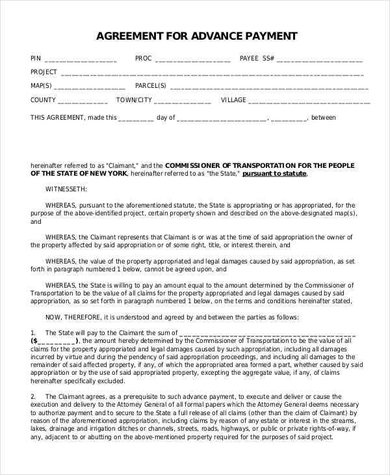
- Advance payment contract: suits a buyer who pays part or all of the price before delivery, for example a customer who pre-pays a photographer or a supplier who requires a deposit before ordering materials. The key clause is what happens to the advance if the job is cancelled.
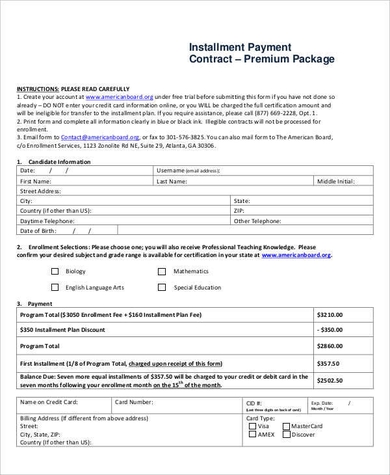
- Installment payment contract: suits a purchase paid in equal or uneven slices, such as furniture, equipment or tuition. List every installment with its own date and amount so nobody has to calculate anything later.
- Car payment contract: suits a private vehicle sale where the buyer pays over time. Include the make, model, identification number, mileage at handover and what happens to the car if payments stop.
- Payment plan contract: suits an existing debt or unpaid invoice that the payer will clear gradually. It should state the outstanding balance and confirm that the plan replaces the original due date.
Fields Worth Filling In Carefully
Most disputes over payments come from a handful of missing or vague details. Before you print, check these fields:
- Full legal names and addresses of both parties, not nicknames.
- The total amount written in figures and in words, with the currency.
- The date of each payment, or the exact rule for calculating it, such as “the first day of each month”.
- Where the money goes: bank details, the name on a check or the person who accepts cash.
- Whether early payoff is allowed and whether it changes the total.
- What counts as late, any grace period, and any late fee or interest that is permitted where you live.
- What happens on default, and how the other side must be notified.
- Signatures, dates and, if you want one, a witness line.
A Short Example of Clear Payment Wording
Vague: “The buyer will pay the balance soon after delivery.” Clearer: “The Buyer will pay a deposit of [amount] on signing and the remaining [amount] in three equal installments due on the 1st of [month], [month] and [month]. A payment received more than five days after its due date is late.” The figures and dates in this example are placeholders for you to replace. Notice that a reader can tell exactly what is owed on any given day, which is the whole point of writing the agreement down.
Mistakes to Avoid With Payment Agreements
- Agreeing on a deposit but not saying whether it is refundable.
- Leaving out the payment method, then arguing about whether a transfer or a check was required.
- Adding a late fee or interest rate without checking whether local rules limit it.
- Making a verbal change to the schedule and never recording it in writing.
- Failing to keep receipts or a running list of payments made.
- Signing a copy with blanks that get filled in later.
Keeping Records After Signing
The agreement is only half the story. Each time a payment is made, note the date, the amount, the method and who received it, and give the payer a receipt or a short written confirmation. Keep the signed contract, the receipts and any emails about changes in one folder, on paper or digitally. If a dispute ever arises, a tidy paper trail showing every payment on time is the strongest thing either side can have. When the last payment clears, it is good practice to write “paid in full” with the date on the agreement and have both parties initial it.
Using the Free Payment Contract Template Downloads
Click a preview to see it at full size, then press the download button underneath it. The downloads are ZIP files, so extract them first and open the document inside with your word processor. Replace the sample names, amounts and dates, delete any clause that does not apply, and read the whole agreement once more from the other party’s point of view. Print it for signatures or save a copy for email, then give each side a signed copy. These are general samples, not legal advice, and contract rules differ from place to place, so consider having a qualified lawyer look over large or unusual arrangements.
Template file guide
Before completing your template
- Make the installment schedule reconcile to the total.
- Identify the payment method and due dates.
- Keep the agreed terms and payment records together.
Use the file links below to open an option directly, or continue to the previews to compare layouts. File formats are taken from the linked filenames. Extract ZIP archives before checking the files inside.
| File or resource | Format / source |
|---|---|
| advance payment contract template | ZIP |
| installment payment contract template | ZIP |
| car payment contract template | ZIP |
| payment plan contract template | ZIP |
Free Payment Contract Template Samples



Related Templates
- free contract between two parties templates for a broader agreement
- free promissory note templates for a simple written promise to repay
- free loan agreement templates for lending money
- free scope of work templates for defining what the payment covers
Frequently Asked Questions (FAQs) About Payment Contracts
How is a payment contract different from an invoice?
An invoice asks for payment of something already delivered. A payment contract is an agreement, signed by both sides, about how and when payment will happen, often before or while the work is done.
Should a deposit be refundable?
That is for the parties to decide, and the contract should say so plainly. State whether the deposit is returned, partly kept or applied to the final price if the deal is cancelled.
Can I add a late fee to my payment agreement?
You can write one in if both sides agree, but some places limit late fees and interest. Check local rules before choosing a figure.
What is the difference between an advance payment and an installment payment?
An advance is paid before goods or services are delivered. Installments split the price into several scheduled payments, often after delivery.
Do both parties need to sign?
Signatures from both sides are strongly recommended because they show each person read and accepted the terms. Formal requirements vary by location and by type of agreement.
What should a car payment contract record?
The price, deposit, payment dates, vehicle details such as the identification number, and what happens if the buyer stops paying. You may also need separate ownership transfer paperwork locally.
How do I handle a change to the schedule later?
Write the change down, mention the original clause it replaces and have both parties sign or initial it, so there is no dispute about the new dates.
Do I need a lawyer to use a template like this?
A template is a helpful starting point, not legal advice. For large sums, long payment periods or unusual terms, a qualified lawyer can check that the agreement suits your local law.
You must be logged in to post a comment.